
Genre:Family dramatization
Cast:Asha Bhosle, Padmini Kolhapure and Ram Kapoor
Director:Mahesh Kodiyal
The mother is a figure that in a flash brings out delicate considerations in every one of us. Getting singing diva Asha Bhosle to play the mother in Mai…” was itself a triumph. At 80, Ashaji, with every one of her long stretches of understanding as an artist of boundless range, brings those vocal feelings into visual terms.
Ashaji tends to under-act or not act at all in the more dramatic minutes. In any case, that powerlessness to give a virtuoso presentation in the high enthusiastic minutes is a piece of the vocalist turned on-screen character’s natural elegance and advance.
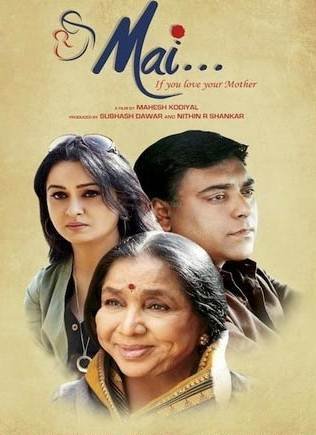
The film raises an indispensable household issue. For what reason does a parent become a weight for the youngsters after a specific age? Thus, when Mai’s child chose to travel to another country without the mother, the girl must choose the option to bring the mother into her two-room home. Then starts the insults and the agrees. The protection from an old absent minded Alzeihmer’s-ridden matriarch in the house is all around created into the liquid idea shortsighted screenplay.
Mai’s child in-law (Ram Kapoor) and his teenaged little girl set up a hefty battle against what they see as an attack of their protection. These scenes are finished with a lot inward conviction and a certified enthusiastic partiality to the ideals of the joint-family framework.
Put on the crossfire between her significant other little girl and her fragile powerless debilitated mother, the girl’s situation is distinctively depicted by Padmini Kolhapure. For sure, this is Ms Kolhapure’s best execution in quite a while. She carries sufficient validity to her part, as does the gifted Ram Kapoor as her better half. The periphery characters likewise advantage from a screenplay which appears to realize its heart superior to its brain.
The scenes are suffused with a high enthusiastic remainder however don’t generally show a significant level of scholarly association in the manner the emergencies develops in the plot.

The characters, for example, the Marathi house cleaner worker and Padmini Kolhapure’s useful manager at her work environment, appear to be developed from cliché good examples and are therefore more symbolical than considerable.
Nonetheless, the film’s enthusiastic substance oversees it. The focal mother-girl relationship is happened at a controlled octave with both Ashaji and Padmini contributing genuine minutes that propose they empathize completely with their characters’ feelings.
The cinematography by Sachin Kumar Krishnan catches residential subtleties of the white collar class family with some measure of understated brilliance. Nitin Shankar’s music, particularly the cradlesong sung by Ashaji, resonates over the plot.
“Mai…” frequently leaves us sad with its depiction of a generation that doesn’t have the foggiest idea how to esteem its seniors. The treatment of the theme is firm and dull at times. In any case, Ashaji liquefies every one of our hesitations. Her innate warmth associates well with the crowd.
This is one mother we might all want to bring home.
 fmovies.game.blog